

I bought the PicassoTiles 100 piece magnetic tile set eight months ago for my grandson Eli. He was three then. He is four now, and the set is still in its box on the bottom shelf of the spare bedroom I keep for the grandkids, and it still comes out almost every Saturday. That is the short version, and if the short version is all you need, take it and go. The rest of this is the long version, which is the one I wish somebody had told me in the aisle.
There is a version of this toy that exists in the photographs online. A calm child in good light builds a tidy castle while a smiling adult kneels beside them, and everything stays standing. Then there is the version that happens on my living-room rug, which involves a tower going over, a four-year-old laughing, a seven-year-old complaining that her stage fell down, and me on my hands and knees finding pieces under the coffee table. The two versions are related. They are not the same. If you are a grandmother scrolling a tablet at ten at night trying to decide whether to spend money on plastic tiles, I would rather tell you the true thing than the pretty thing.
The Quick Verdict
Worth it, but not for the reason the box suggests. This is a together toy, not a hand-it-over toy, and it makes a genuine racket when it falls.
Amazon Check Today's Price →100 pieces, no batteries, nothing to charge
The full contents and today's price are on the listing. Ages three and up, which is not a suggestion.
Amazon Check Today's Price on Amazon →How These Ended Up on My Toy Shelf
The set lives on the bottom shelf in the grandkids' room, which is really just the spare bedroom with a bed nobody sleeps in and a shelf of toys I have collected over seven years of being Mia's grandmother. Bottom shelf matters. A toy a four-year-old cannot reach by himself is a toy that does not get played with, and Eli has never once asked me to get this down for him. He just goes and gets it.
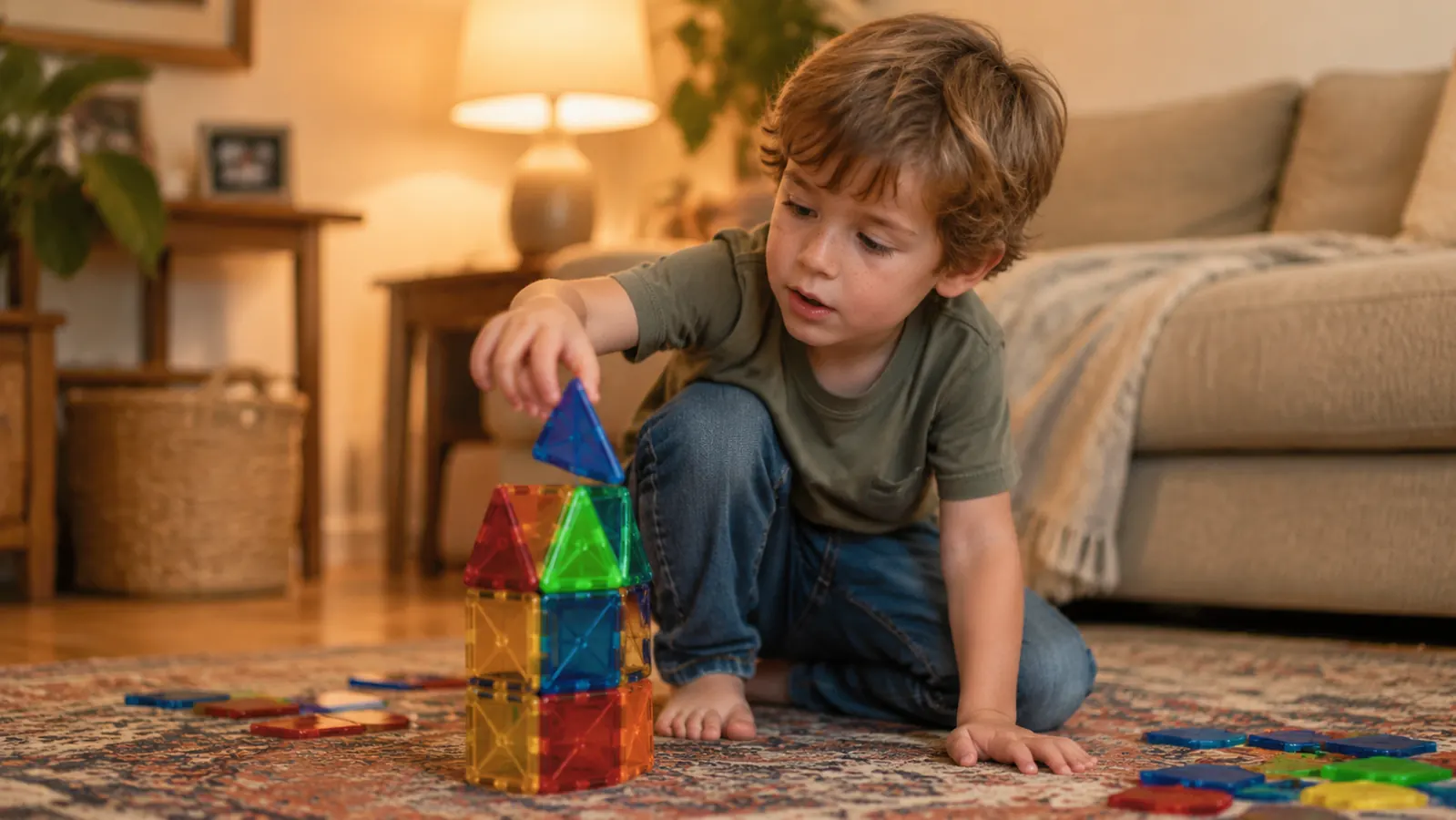
We build on the living-room rug because it is soft and the pieces do not slide out from under a building. We build on the kitchen floor while I am cooking, because that is where I am and I am not going to pretend otherwise. Mia, who is seven, uses the flat pieces to build stages for the shows she puts on with the dress-up trunk. Eli builds towers. Sometimes Eli builds a tower specifically so that Mia's show can have a backdrop behind it, and that is about as much cooperation as those two manage in an afternoon.
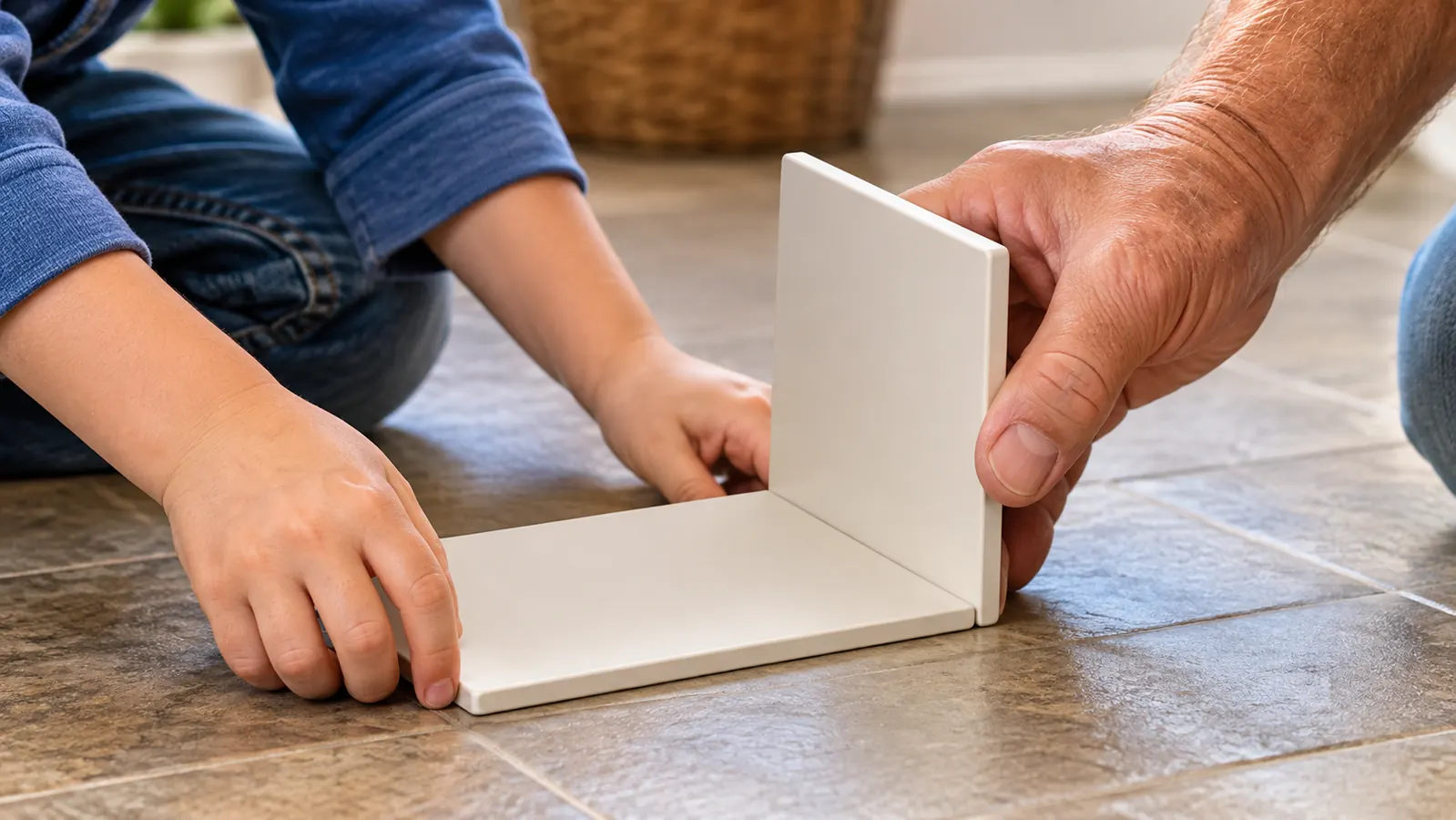
Here is the thing I did not expect. I build with them. Not the way a parent supervises, sitting on the sofa saying that's nice, honey. I am on the floor. I hold one wall steady while Eli pushes another against it. I hand Mia the pieces she is reaching for. My knees complain about this and I do it anyway, and if I am honest, that is most of why the toy earns its shelf space. It gives the three of us something to do with our hands while we talk.
What Is Actually in the Box
The box measures 14 by 11.63 by 3.13 inches and weighs 5.5 pounds. That is a real box, not one of those packages that turns out to be mostly air and disappointment. Inside are 100 pieces, an instruction manual, and nothing else. No batteries, no charging cable, no app, no subscription, nothing that needs a password. Plastic and magnets. That is the whole product.
A hundred pieces sounds like a great deal until they are all on the floor in front of you, and then it sounds like a slightly different number than the one you had in your head. It builds a good tower and a good stage. It does not build both at the same time without some negotiation, and the negotiation is usually me suggesting that the stage could be smaller this week.
I want to be fair to the instruction manual, so here is fair: it exists. Nobody buys this for the manual. Eli looked at it once, the way he looks at a piece of paper that is not a toy, and then went back to the tiles. The appeal of PicassoTiles is that there is nothing to follow. You put two edges together, the magnets find each other and pull the joint into line, and then you do it again. The toy teaches itself in about ninety seconds.
What I did not expect was how much of the play is the sound and the feel. The pieces snap together with a click that is genuinely satisfying, and a child figures out within a minute that the click means it worked. Eli will sometimes build and unbuild the same corner just to hear it. I have caught myself doing it too, which tells you something about who this toy is really for.
The Part Nobody Warns You About
These are loud. Not loud like a screen, loud like a drawer of dishes going over. When Eli's tower comes down, and it always comes down, 100 pieces of plastic hit the kitchen floor at once and it sounds like something broke. The first four or five times I flinched. I don't anymore. But if you have a husband who naps in the afternoon, or a dog who does not care for sudden noises, or a downstairs neighbor, you should know this going in, because the pictures do not convey it at all.
Gravity wins every single time. A tower will hold maybe six or seven levels before the weight and the leverage get ahead of the magnets and the whole thing folds in on itself. Some children find this upsetting. Eli finds it to be the best part of the whole afternoon. Mia finds it upsetting when it is her stage that goes. You will end up being the person who says let's build it lower this time, and you will say it about forty times before lunch.
The magnets are strong enough to hold a wall and easy enough for a four-year-old to pull a joint apart with his own hands. That balance is the entire trick of the toy, and PicassoTiles got it right. Stronger magnets and a small child could not take down his own building, so he would quit. Weaker magnets and nothing would stand up, so he would also quit. Whoever worked that out earned their salary.
The magnets are strong enough to hold a wall and easy enough for a four-year-old to pull apart with his own hands. That balance is the entire trick.
Mia has used these to build a backdrop and a low platform she calls a stage, and then stood behind it in a costume from the dress-up trunk and made me sit on the sofa for the performance. That is a use for this toy that is nowhere on the box, and I suspect every family finds their own version of it. The tiles are flat and they stand up, which means they are a wall, a curtain, a house, a puppet theater, or whatever the seven-year-old in your life has decided they are today.
What It Replaced on the Shelf
Before these, the bottom shelf was mostly things that made noise or light. There was a plastic tablet that sang the alphabet and asked questions in a chirpy voice, and there was a toy that played four seconds of a song every time you pressed a button. Both of them got about a week. The songs got on my nerves, the batteries ran down, and nobody asked where they went. The PicassoTiles set has never once needed me to find a tiny screwdriver, and I cannot tell you what a relief that is.
I also have a set of plain wooden blocks that belonged to my daughter when she was small. The children use them. But a wooden tower comes down at the first bump because there is nothing holding it together, and Eli gets discouraged before he gets anywhere. The magnets are the whole difference. He can bump a wall and the wall stays up, and that keeps him in the game about four minutes longer than the wooden blocks do. Four minutes is a lot when you are four.
What Eight Months of Saturdays Does to a Toy
Nothing has cracked. Nothing has split at a seam or lost a magnet. I have stepped on a piece in bare feet twice, which is its own kind of testimony, and the piece survived both times. The edges are a little scuffed from being dragged across the rug and dumped in and out of the box, which is what happens to anything a child actually loves. Compare that to the light-up toys on the same shelf, two of which are dead and one of which is dead and also annoying.
Cleanup is the real chore and I will not dress it up. A hundred pieces means either sorting them or not sorting them, and I gave up on sorting around month two. Eli puts them back in the box loose. It takes about four minutes if he helps and about twelve if he does not, and I have learned to start the cleanup while he is still building the last thing, because there is always a last thing and it always gets built anyway.
The one thing I would change is the size of the set. When Mia wants a stage and Eli wants a tower on the same afternoon, 100 pieces is not quite two projects. We make it work by making both things smaller. I have thought about buying a second box and I have not, mostly out of stubbornness, but the thought crosses my mind most Saturdays. If you have two grandchildren who will build at the same time, that is worth knowing before you order.
The storage box it came in is still the storage box. It has been dropped, sat on, and used as a step stool, and the corners are soft now but it holds. I keep meaning to buy something nicer and I keep not doing it, because the box works and it slides under the shelf where Eli can reach it. If you are the type to want a pretty basket, a pretty basket will do fine. A hundred tiles is not much volume once they are stacked flat.
What I Liked
- Eight months of Saturdays, dropped on a kitchen floor, stepped on twice, nothing cracked.
- No batteries, no app, no charging, nothing to subscribe to.
- Magnet strength is right for small hands: strong enough to hold a wall, easy enough for a four-year-old to take apart himself.
- A seven-year-old and a four-year-old can both use the same box on the same afternoon.
- A grandparent can build alongside instead of watching from the sofa.
Where It Falls Short
- A collapsing tower sounds like a drawer of dishes going over.
- 100 pieces is not quite two projects at once.
- The instruction manual is not worth reading.
- Cleanup runs four to twelve minutes every time.
- The box says three and up. With a two-year-old in the house, this is a shelf toy, not a floor toy.
The Ages, and the Thing Printed on the Box
The box says three years and up and I would not argue with it. Sophie, my son's little girl, is two and lives up in Oklahoma City, so she is here about once a month. When Sophie is on the floor, the tiles go back on the shelf. There are magnets in these pieces and a two-year-old puts things in her mouth, and that is the end of that discussion. Nobody at the store will tell you this. I am telling you.
The set reaches further up than I expected. Mia at seven gets something completely different out of it than Eli at four. She is building a shape she has in her head. He is building a thing to knock down. Same box, same afternoon, both of them occupied, which is rarer than it sounds in a house with two children who are usually two years apart in every way that matters.
Who This Is For
This is for a grandparent who is going to be on the floor anyway. If you are looking for something to hand a child at the door and then go start supper, this is not that toy. Nothing here entertains a child by itself. But if you are willing to sit down on the rug and hold one wall steady while a four-year-old pushes another one against it, you will get more out of one box of these than out of anything else on my shelf.
It is also a good gift to mail. It weighs 5.5 pounds in a box about fourteen inches long, so it travels, and it needs nothing to make it work. It does not need batteries, which means it does not become a gift that requires the parents to go to the store before the child can touch it. I have mailed a great many things to Oklahoma City over the years and the ones that need batteries are the ones I hear about last, if I hear about them at all.
Who Should Skip It
Skip it if noise bothers you. Skip it if you have a napping person or a nervous animal in the house. Skip it if there is a child under three who will be on the same floor, because the box says three and up and the box is right.
And skip it if you are buying for a child who gets genuinely upset when a build falls down. Some children do, and there is nothing wrong with them, but this toy will turn into a fight every visit. Eli laughs when his tower goes. His sister does not. You know your grandchild better than any review does, including this one.
The toy my grandson still goes to the shelf for, eight months on
One box, 100 pieces, plastic and magnets, 5.5 pounds. It has survived eight months of Saturdays on my living-room rug.
Amazon Check Today's Price on Amazon →